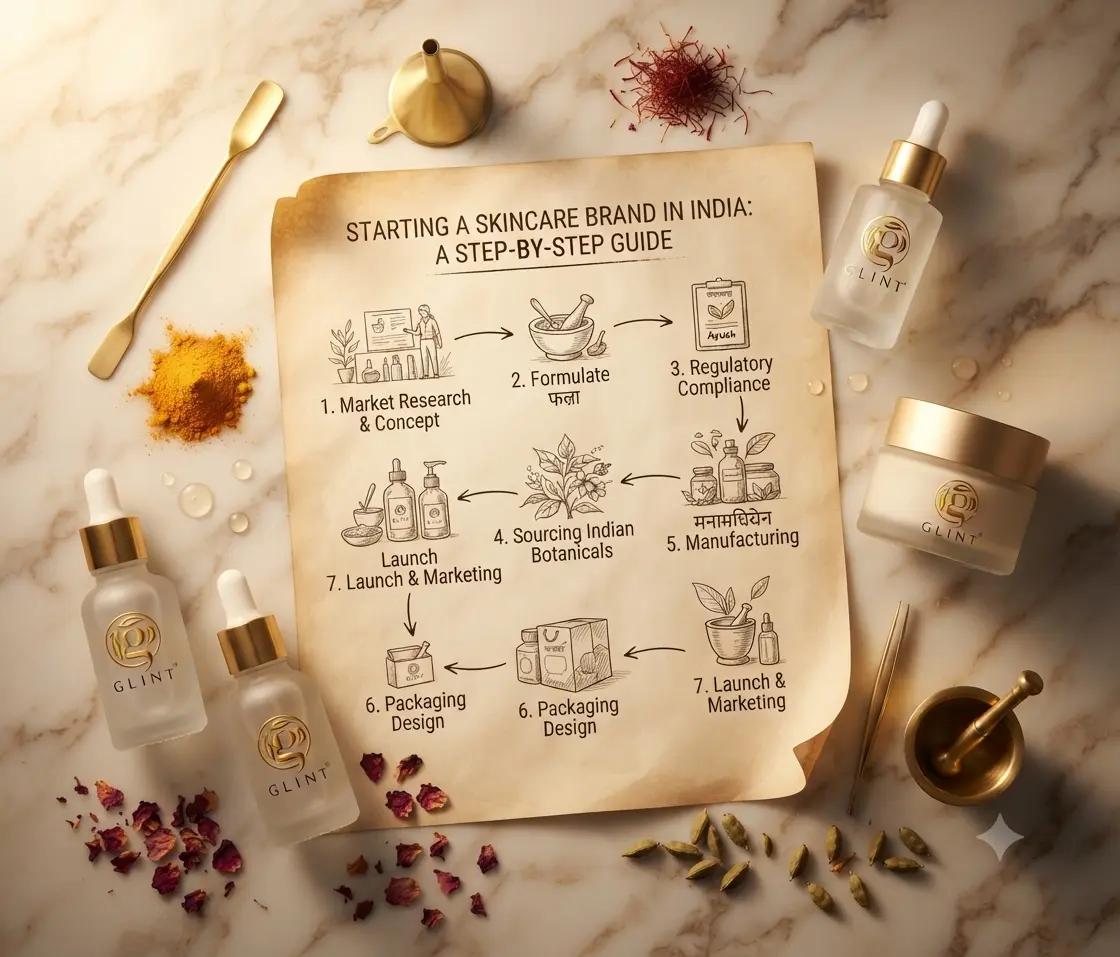

India’s skincare market is one of the fastest-growing in the world, fueled by rising disposable income, a boom in D2C brands, and a new generation of consumers who care deeply about ingredients and results. If you’ve ever thought about launching your own skincare line, there has never been a better time to start — or an easier one, thanks to private label and contract manufacturing.
Here’s a step-by-step guide to building a skincare brand in India, from idea to shelf.
1. Define Your Niche and Target Audience
Before anything else, get specific about who you’re building for. “Skincare for everyone” rarely wins in a crowded market. Are you targeting acne-prone skin, anti-aging, Ayurvedic and natural beauty, men’s grooming, or budget-friendly daily essentials? A clear niche shapes your formulations, pricing, and marketing from day one.
2. Research the Market and Validate Demand
Trends move quickly in skincare — today’s viral ingredient can lose momentum within a year. Rather than guessing, lean on structured market research to validate demand, understand competitor pricing, and identify gaps you can fill. Good research at this stage saves you from investing in products nobody actually wants.
3. Decide on Your Manufacturing Model
This is one of the biggest early decisions. You generally have three paths:
- White label: choose from existing, ready-made formulations and brand them as your own — fastest and most cost-effective way to launch. Learn more about white label manufacturing.
- Custom formulation: work with a manufacturer’s R&D team to build a unique formula from scratch — ideal if you want true differentiation. Explore custom formulation services.
- Contract manufacturing: bring your own formula and have a manufacturer produce it at scale. See how contract manufacturing works.
Many new brands start with white label to test the market, then move to custom formulation once they’ve found traction.
4. Choose the Right Manufacturing Partner
Your manufacturer is effectively your production team, quality control department, and compliance partner rolled into one. Look for a partner with proven industry experience, strong certifications (GMP, ISO, and others relevant to your target markets), and a well-equipped manufacturing facility. If you’re unsure what to look for, this guide on choosing the right cosmetic manufacturer breaks down the key factors.
5. Formulate Your Products
Whether you go white label or custom, this is where your product actually comes to life. Focus on:
- Skin-safe, dermatologically sound ingredients
- Texture and sensorial experience (how it feels, smells, absorbs)
- Stability testing to ensure shelf life
- Compliance with Indian cosmetic regulations (BIS standards) and any export markets you’re eyeing
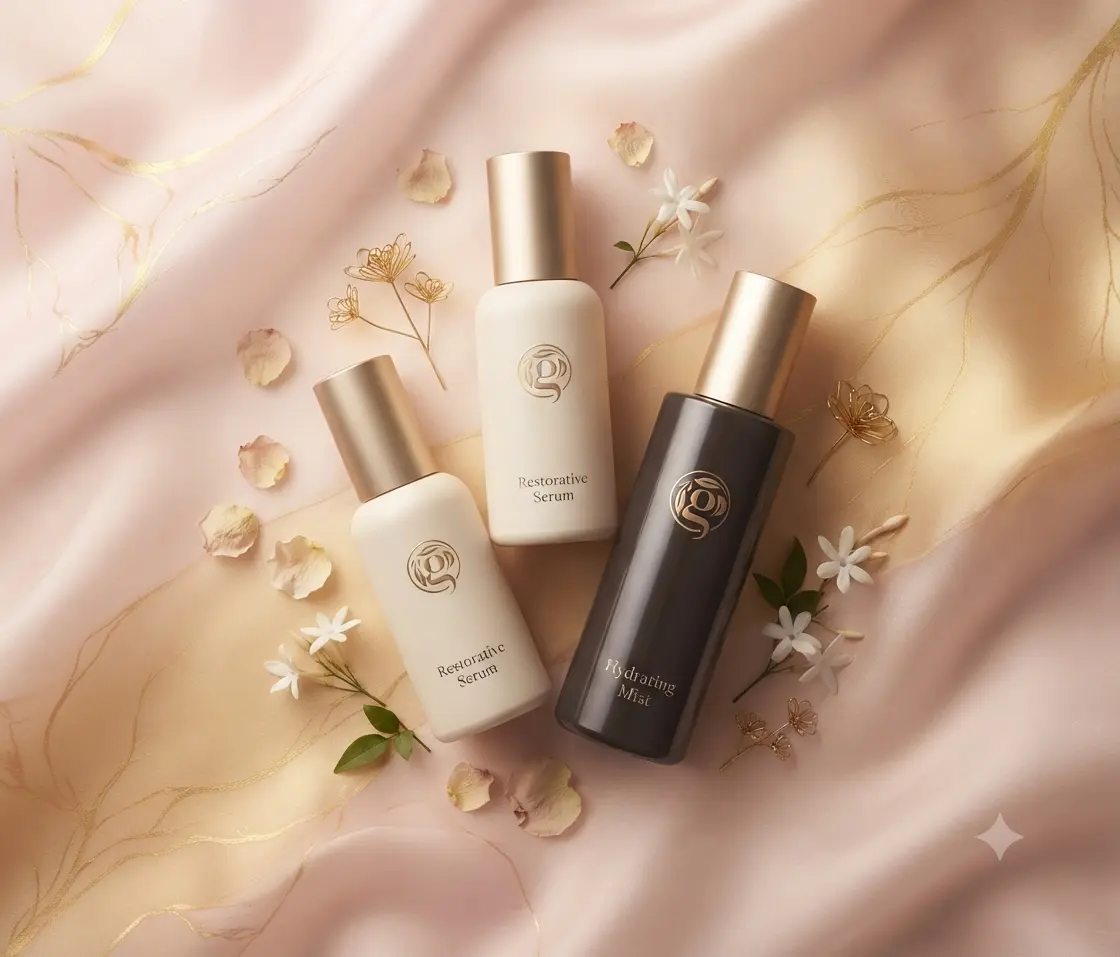
Glint’s skin care catalogue spans creams, serums, face washes, and lotions that can serve as a strong starting point for private label brands.
6. Handle Regulatory Compliance and Licensing
Skincare products sold in India need to comply with Bureau of Indian Standards (BIS) regulations and, depending on your product claims, may require additional approvals. A manufacturer with strong regulatory experience and the right certifications will guide you through this — it’s one of the most overlooked steps by first-time founders, and getting it wrong can delay your launch significantly.
7. Design Packaging and Branding
Skincare is a visual category — packaging often makes the first impression before the product itself. Invest in packaging that reflects your brand positioning, whether that’s minimalist and clinical or warm and Ayurvedic. Make sure labeling includes all legally required information: ingredients, batch number, manufacturing details, and usage instructions.
8. Plan Your Pricing and Distribution
Decide early where you’ll sell: your own D2C website, marketplaces like Amazon and Nykaa, retail stores, or a mix of all three. Your pricing needs to account for manufacturing cost, packaging, marketing, platform commissions, and your margin — work backward from what your target customer is willing to pay.
9. Launch and Build Feedback Loops
Once your first batch is ready, launch with a focused go-to-market plan — influencer seeding, a strong hero product, and clear before/after messaging tend to work well in skincare. Track customer feedback closely in the first few months; small formulation or packaging tweaks early on can prevent bigger problems at scale.
10. Scale With the Right Partner
As demand grows, you’ll need a manufacturer who can scale production without compromising quality or turnaround time. This is where comprehensive manufacturing services become valuable — combining formulation, production, and market support under one partnership so you’re not managing multiple vendors as you grow.
Final Thoughts
Starting a skincare brand in India is more accessible today than ever, but the brands that succeed are the ones that get the fundamentals right: a clear niche, solid research, and a manufacturing partner who can support you from your first batch to your fiftieth.
At Glint Cosmetics, we’ve helped brands across India and 55+ countries go from concept to shelf, with 40+ years of formulation expertise and GMP, ISO, Halal, and GCC certifications. Explore why brands choose us, browse our skin care catalogue, or get in touch to start building your skincare brand today.