Most cosmetic brands don’t fail because of bad ideas.
They fail because something breaks along the way.
Sometimes it’s the product.
Sometimes it’s consistency.
And very often—it’s the manufacturer.
A founder once approached us after launching a skincare line.
The first batch sold out quickly.
The response was great.
Everything seemed to be working.
But when they scaled production, things changed.
The texture felt different.
Customers noticed.
Returns started coming in.
What went wrong?
Nothing visible.
Just a small inconsistency in manufacturing.
And in this industry, that’s all it takes.
The Reality of Building a Beauty Brand Today
In 2026, starting a cosmetic brand is easier than ever.
There are manufacturers who will:
- Help you develop a formulation
- Package your product
- Get you to market quickly
This has opened doors for many new brands.
But it has also created a new challenge:
👉 Too many brands that look good at launch…
👉 And struggle when it’s time to grow
Where Most Brands Get It Wrong
At the beginning, most decisions are driven by:
- Speed
- Cost
- Convenience
And that works—for the first step.
But growth brings different questions:
- Can your product stay consistent across batches?
- Can your manufacturer handle increasing demand?
- Can quality remain unchanged as volumes increase?
Because what helped you launch
may not support you when you scale.
Why Manufacturing Matters More Than Ever
Today’s consumers are sharper.
They notice:
- Texture changes
- Fragrance variations
- Performance differences
And when they do, they don’t come back.
That’s why manufacturing is no longer just backend work.
👉 It directly impacts customer trust.
The Shift Happening in the Industry
Earlier, manufacturers were seen as vendors.
Now, they are becoming growth partners.
Many offer:
- Custom formulations
- Product development support
- Packaging solutions
But for brands that want to build something long-term,
one thing matters more than all of this:
👉 Consistency at scale
Because innovation may attract customers.
But consistency is what keeps them.
What Truly Differentiates a Manufacturer
Every manufacturer will talk about:
- Quality
- Ingredients
- Innovation
But very few talk about:
- Process
- Systems
- Repeatability
At scale, manufacturing is not about creativity.
👉 It’s about control.
The ability to deliver the same product—
again and again—without variation.
The Cost of Choosing Wrong
A weak manufacturing setup doesn’t fail immediately.
It fails slowly.
- A delay here
- A batch issue there
- A quality complaint somewhere
Until one day, the brand starts losing trust.
And by then, it’s much harder to fix.
Where Glint Fits In
At Glint, we’ve seen this journey play out many times.
Brands that:
- Start strong
- Grow fast
- And then struggle to maintain consistency
That’s why we don’t position ourselves as a launch partner.
We work with brands that are thinking ahead.
Brands that understand:
👉 The real challenge is not creating a product
👉 It’s delivering the same product—every time, at scale
Because building a cosmetic brand is not about one successful launch.
It’s about building something that can sustain, perform, and grow.
Final Thought
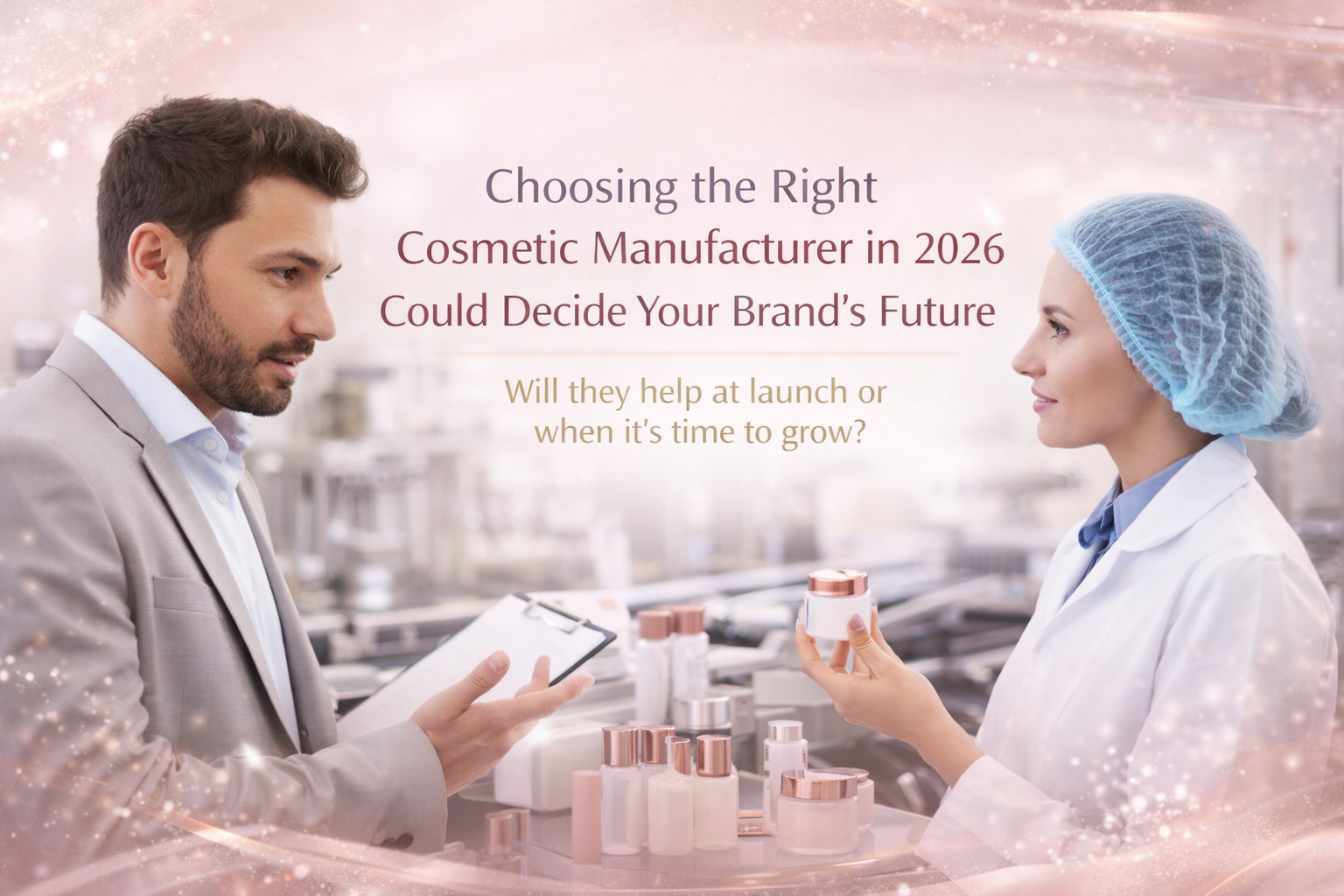
If you’re choosing a cosmetic manufacturer in 2026, don’t just ask:
👉 “Can they make my product?”
Ask:
👉 “Can they help me maintain this quality when I grow?”
Because in today’s beauty industry:
Launching is easy.
Scaling is hard.
Sustaining is rare.
And the difference often comes down to one decision—
the partner you choose at the start.