Launching or scaling a beauty brand comes down to one decision that shapes everything else: who makes your product. Your formula, your packaging, your delivery timelines, even your regulatory standing all depend on the manufacturing partner you choose. Pick well, and you get a partner who grows with your brand. Pick poorly, and you inherit delays, inconsistent quality, and compliance headaches you didn’t sign up for.
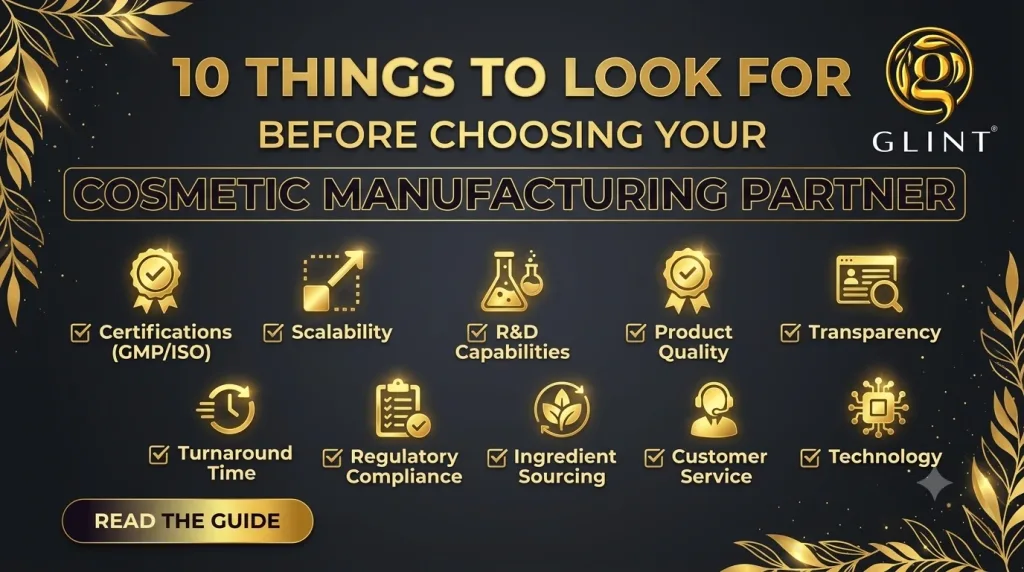
Here are 10 things every beauty brand — new or established — should evaluate before signing on with a cosmetic manufacturer.
1. Years of Industry Experience
Cosmetic formulation isn’t something a manufacturer perfects overnight. Stability testing, ingredient sourcing, texture consistency, and shelf-life all improve with decades of hands-on expertise. A manufacturer with a long track record has already solved the problems a newer player hasn’t encountered yet. Look into their company overview and history to understand how long they’ve been in the business and what they’ve built along the way.
2. Range of Manufacturing Services
Your needs today might not be your needs in a year. A partner who only offers one service — say, private labeling — can’t support you if you later want a fully custom formula. Look for a manufacturer offering contract manufacturing, white label manufacturing, custom formulation, and comprehensive manufacturing services under one roof, so your brand can evolve without switching partners.
3. In-House R&D and Formulation Expertise
Great products start with strong formulation science. Ask whether the manufacturer has an in-house R&D team that can develop new formulas or improve existing ones, rather than relying entirely on stock formulas. This matters most if you’re building a differentiated product — organic actives, unique textures, or a specific sensorial experience.
4. Product Category Specialization
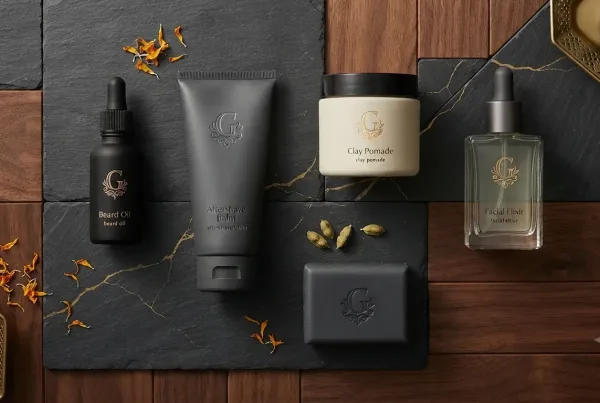
Not every manufacturer is equipped to handle every category well. A partner strong in skincare may not have the same expertise in baby care or intimate care, where formulation and compliance requirements are stricter. Check their catalogue across categories like skin care, hair care, personal care, men’s care, baby care, toiletries and oral care, and intimate care to see if they genuinely specialize in your product type.
5. Certifications and Regulatory Compliance
This is non-negotiable. Your manufacturer should hold recognized certifications — GMP, ISO, Halal, GCC, or others relevant to the markets you plan to sell in. Certifications aren’t just paperwork; they signal that a facility follows consistent quality and safety protocols. Review the manufacturer’s certificates and achievements before moving forward, especially if you’re exporting internationally.
6. Facility and Production Capacity
A manufacturer’s physical plant tells you a lot about what they can actually deliver. Visit or virtually tour the manufacturing plant to check hygiene standards, equipment, and batch capacity. A brand scaling toward large retail or export orders needs a partner with the infrastructure to match, not just the promise.
7. Turnaround Time and Reliability
Speed to market matters, but so does consistency. Ask about average turnaround from concept to delivery, and how the manufacturer handles reorders and scaling once your product takes off. On-time delivery rates and responsiveness are strong indicators of how smoothly your day-to-day partnership will run.
8. Market Research and Brand Support
The strongest manufacturing partners don’t just execute — they help you make better decisions before production starts. A manufacturer offering market research as part of their service can help validate trends, ingredients, and positioning specific to your target region, saving you from costly missteps later.
9. Track Record with Other Brands
Ask for references or case studies. A manufacturer that has helped other brands go from concept to shelf — and can point to real outcomes — is a safer bet than one still building its portfolio. Reviewing their gallery and past work can give you a feel for the quality and diversity of products they’ve produced.
10. Transparency and Ease of Communication
Finally, evaluate how easy the manufacturer is to actually work with. Do they respond quickly? Are they upfront about costs, MOQs, and timelines? A transparent partner will walk you through the full process before you commit. The best way to gauge this is to simply reach out and start a conversation — contact the team directly with your questions and see how they respond.
Final Thoughts
Choosing a cosmetic manufacturing partner is a long-term decision, not a one-off transaction. The right partner brings experience, certifications, formulation expertise, and the flexibility to grow alongside your brand.
At Glint Cosmetics, we bring over 40 years of manufacturing experience, GMP, ISO, Halal, and GCC certifications, and a full suite of services — from contract manufacturing and white labeling to custom formulation — to brands across 55+ countries. If you’re ready to find a manufacturing partner built for the long run, explore why brands choose us or get in touch to start the conversation.