Overview Summary
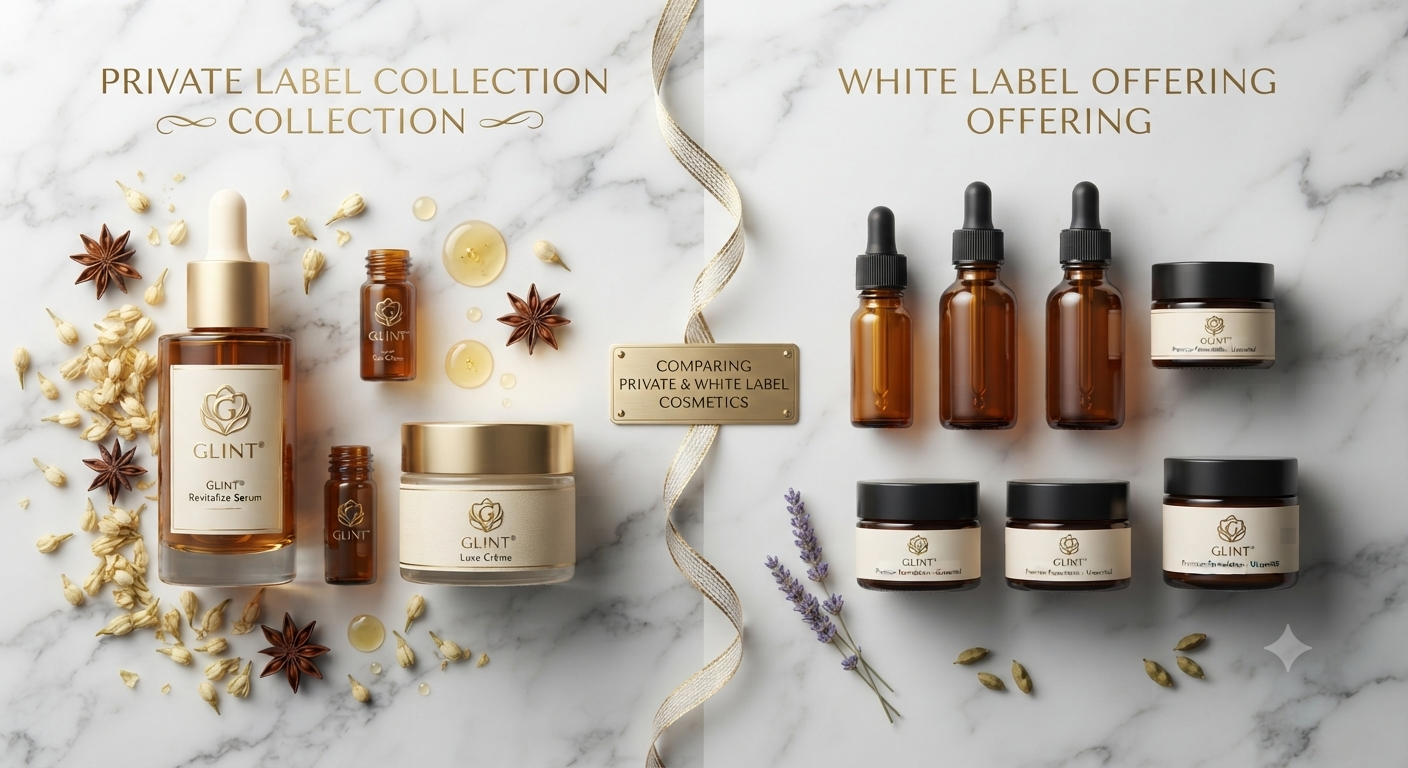
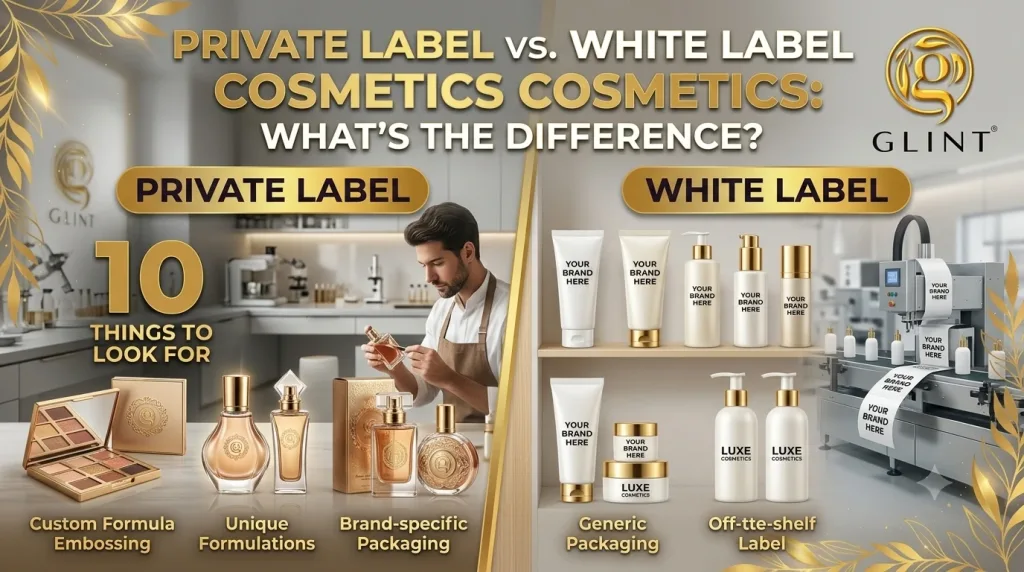
Private label and white label cosmetics both let brands sell products manufactured by a third party under their own name — but the key difference lies in customization. Private label cosmetics are formulated with brand-specific tweaks in fragrance, texture, or ingredients, while white label cosmetics use an identical, off-the-shelf formula sold to multiple brands with only the packaging and branding changed. This guide breaks down the differences, costs, timelines, and which model suits different stages of a beauty business.
Quick Definitions
White label cosmetics are pre-made, ready-to-brand products. The manufacturer creates one formulation and sells it to as many brands as want to buy it — only the label, packaging, and brand name change. Multiple companies could be selling the exact same face cream under different names.
Private label cosmetics start from a manufacturer’s existing formulation but allow customization — you can request changes to fragrance, active ingredient concentration, texture, color, or packaging so the final product is unique to your brand, even if it’s not built entirely from scratch. Our earlier guide on what private label in cosmetics means covers this model in more depth.
Both models sit between fully custom formulation (built from zero, exclusively for one brand, often through contract manufacturing) and buying wholesale unbranded stock.
Private Label vs White Label Cosmetics: Side-by-Side Comparison
| Factor | White Label | Private Label |
| Formula | Identical for all buyers | Customizable within existing base |
| Exclusivity | None — same product sold to multiple brands | Higher — tailored to your brand |
| Cost | Lower | Slightly higher due to customization |
| MOQ | Usually lower | Moderate to higher |
| Turnaround Time | Fastest (days to a few weeks) | Longer (4–8 weeks depending on changes) |
| Branding Control | Packaging and labeling only | Packaging, fragrance, texture, actives |
| Best For | Fast market testing, low budget launches | Brands building a distinct identity |
Private Label Cosmetics: Pros and Cons
Pros
- More control over how the product looks, feels, and smells
- Easier to build brand differentiation and loyalty
- Still faster and cheaper than fully custom formulation
- Access to manufacturer’s existing R&D and safety testing data
Cons
- Slightly higher cost per unit than white label
- Longer lead time due to customization and sample rounds
- Still limited by the manufacturer’s base formulation library
White Label Cosmetics: Pros and Cons
Pros
- Lowest cost and fastest way to get a product to market
- Low MOQs make it ideal for testing demand before investing further
- No formulation or R&D expertise needed from the brand’s side
Cons
- Zero exclusivity — competitors can sell the identical product
- Little room for brand storytelling around ingredients or formulation
- Harder to build long-term brand loyalty on product alone
Which Model Should You Choose?
Choose White Label If:
- You’re testing a new product category or market before committing budget
- Speed to launch matters more than product exclusivity
- You’re an influencer or small business launching a first product line
- Your brand differentiation will come from marketing, packaging design, or community rather than formulation
Choose Private Label If:
- You want a product that feels distinct from competitors
- You’re building a long-term brand with a specific positioning (clean beauty, Ayurvedic, dermat-tested, vegan)
- You have a moderate budget and can accommodate slightly longer timelines
- You plan to scale and want more control as your brand grows
Consider Custom Formulation If:
- You have a unique ingredient story or patent-worthy formula
- Budget and timeline allow for full R&D from scratch
- You’re an established brand looking to protect IP and differentiate deeply
For a deeper look at how manufacturer choice affects all three models, see choosing the right cosmetic manufacturer in 2026.
A Note on Compliance
Whether you go private label or white label, every cosmetic product sold in India must comply with the Cosmetics Rules, 2020 under CDSCO, including proper ingredient labeling, manufacturing license disclosure, and batch traceability. Always confirm your manufacturer provides compliant labeling support and documentation regardless of which model you choose — check their certifications and achievements before signing on.
How Glint Cosmetics Supports Both Models
Glint Cosmetics offers both white label and private label manufacturing, so brands can start with a ready-to-launch white label product and transition to a customized private label formulation as they scale — without switching manufacturing partners. GMP-certified production, flexible MOQs, and in-house formulation support make it easier to move between models as your brand’s needs evolve, whether you’re working across skincare, haircare, or personal care.
If you’re deciding between private label and white label cosmetics for your next launch, get in touch with Glint Cosmetics to discuss which model fits your budget, timeline, and brand goals.
Frequently Asked Questions
1. Is private label more expensive than white label? Generally yes, but the difference is usually modest — the added cost reflects formulation customization, not a completely different manufacturing process.
2. Can I switch from white label to private label later? Yes. Many brands launch with white label products to test demand, then move to private label formulations once they have sales data and a clearer brand identity.
3. Do white label products have lower quality than private label? Not necessarily. White label products go through the same manufacturing and safety standards — the difference is exclusivity and customization, not quality.
4. What’s the minimum order quantity difference between the two? White label MOQs are typically lower since the formula is already finalized. Private label MOQs are slightly higher to account for customization runs and sample approvals.
5. Which model is better for a first-time beauty brand? White label is often recommended for first-time brands testing the market, while private label suits those ready to invest in a more distinct product identity from the start.
Not sure which model fits your brand? Talk to Glint Cosmetics about your product goals, budget, and timeline.